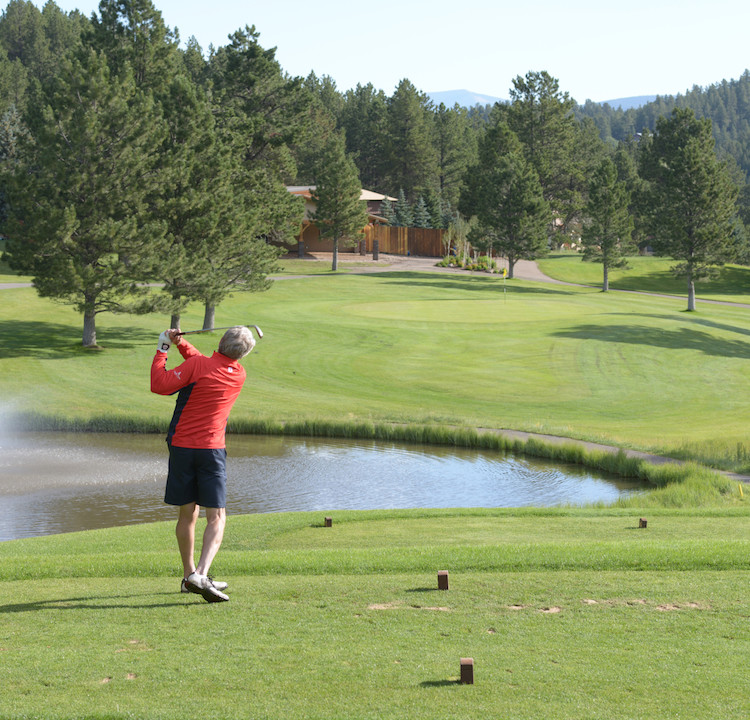
At Angel Fire Resort, some things are more than just infrastructure. They become part of the story. For nearly six decades, Lift 2 has been one of those things.
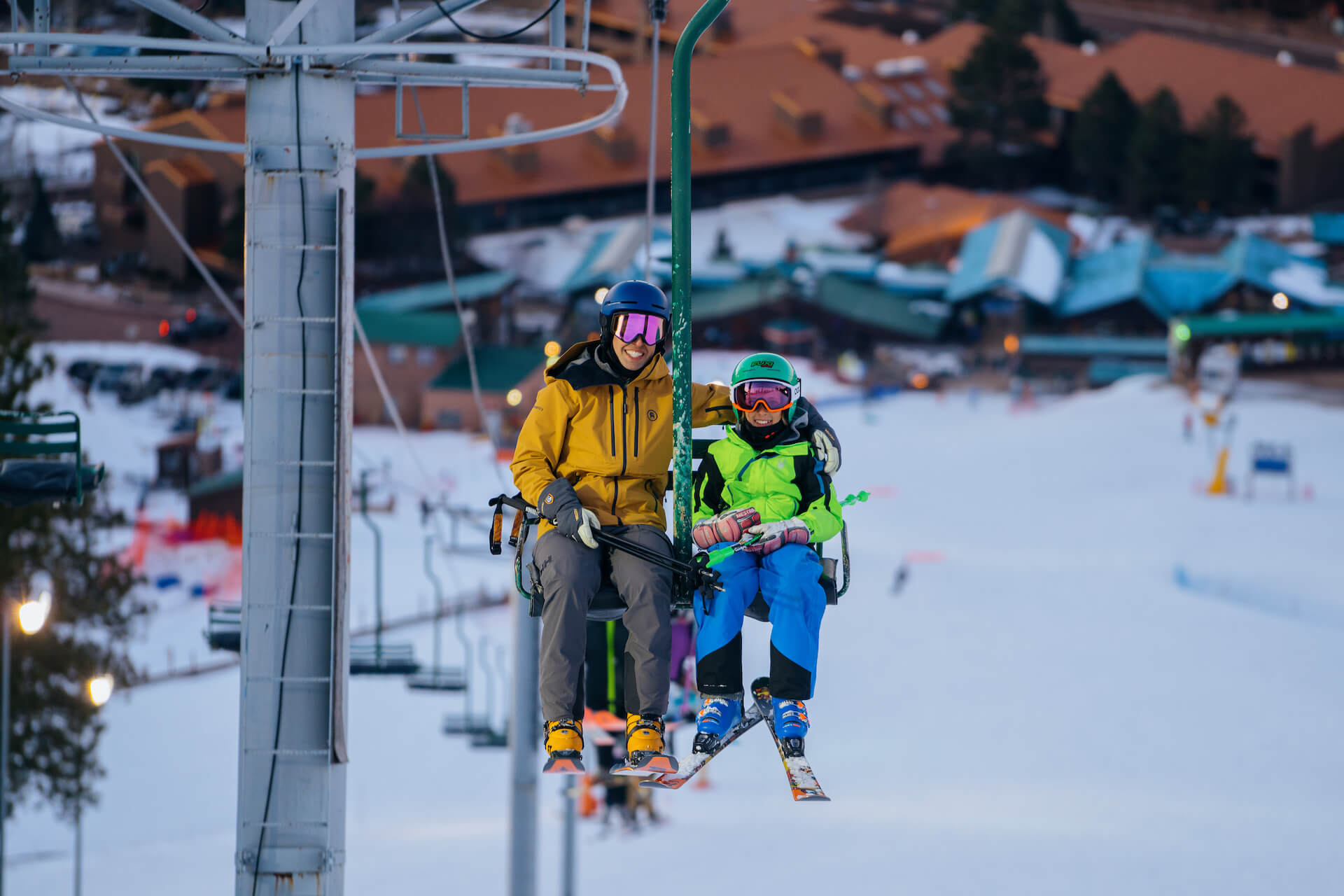
At 59 years old, this fixed-grip, two-seater chairlift has been part of the mountain since the very beginning. It’s as old as the resort itself. It stands as a quiet witness to the growth of Angel Fire Resort and the generations of skiers and riders who have called these slopes home. It’s carried countless guests up the mountain. And it’s offered access to beloved runs like Exhibition and High Road, delivering not just elevation, but anticipation.
Long before lifts were known by numbers, they were known by color. Lift 2 was once “the red chair,” though over the years it wore other colors too: blue, black, and likely more. It was part of a colorful system that made perfect sense, unless, of course, you were colorblind. (A detail that made navigating the mountain a bit more adventurous for some.)
Lift 2 has never been static. It’s been moved, adapted, and improved over time. At one point, it even featured a midway unload station, back before Chair 1 (now Dreamcatcher) was installed. Like the mountain itself, it evolved with the needs of the resort while maintaining its original character.
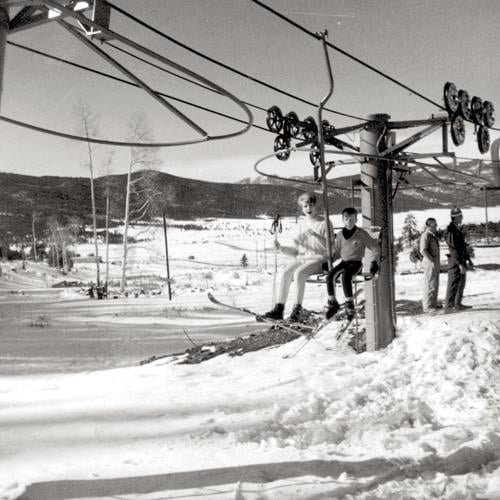
And for many, Lift 2 wasn’t just a lift. It was a memory-maker.
For Angel Fire’s Marketing Director, Wolfe Ashcraft, the ski area was his childhood playground. Growing up in his parents’ ski shop, he spent his days on the mountain, with lift operators doubling as babysitters and Lift 2 as part of his daily routine.
Like many kids, he tested the limits.
There were small rebellions, like swiping a lift operator’s hat mid-ride and dropping it into the safety net below, where it was nearly impossible to retrieve. And then there was the story that has lived on for decades.
At just five years old, Wolfe and his friend decided to play a game of “blind man’s bluff” on the chairlift. Eyes closed, he waited for the signal to unload. What he thought was “get off” was actually “get ready to get off.”
He stepped off anyway.
Not at the top, but at the last tower.
While he remembers it as hilarious, the lift operator and mountain manager at the time likely disagreed. The consequence? A week without a ski pass and a very intimidating meeting with Mountain Manager Stu Lasseter, who, in Wolfe’s memory, stood seven feet tall with a walrus mustache and the presence of a military colonel.
Lift 2 also played a role in moments of real-life heroism.
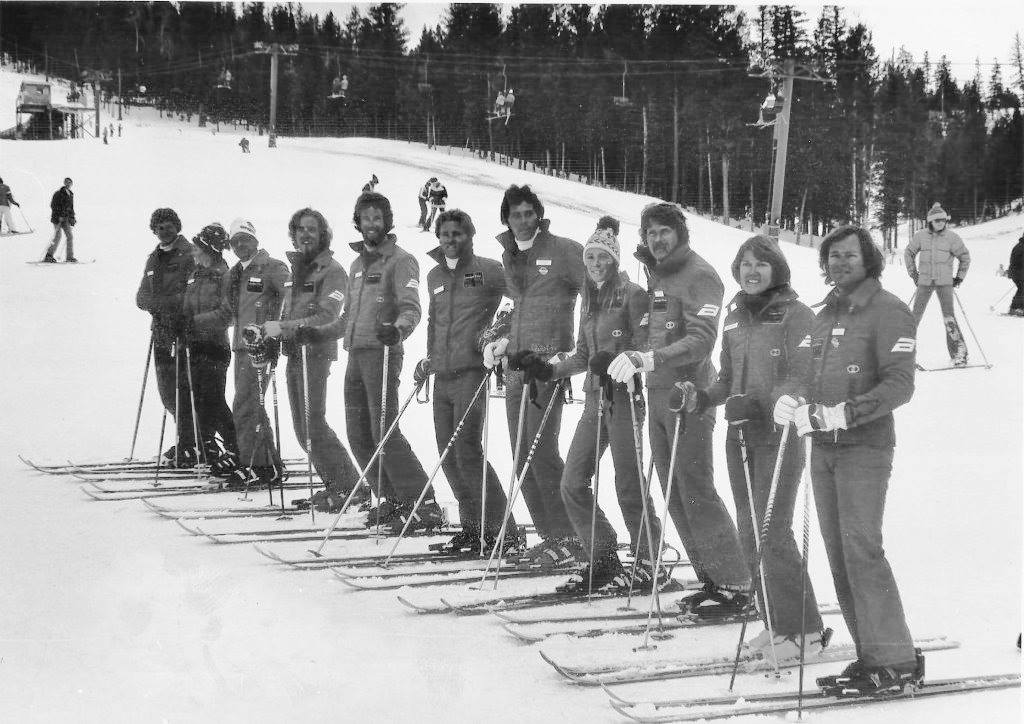
In the mid-1980s, a child slipped while loading and was left dangling from the chair, held only by their parent. In a moment that still feels larger than life, Kirk Hill (6th from the bottom in the picture above) climbed the nearest tower, moved hand-over-hand along the line, and dropped onto the chair to pull the child to safety.
“It was like watching a superhero,” Wolfe recalls.
Lift 2 also served as the lift for Kirk Hill’s world record endurance skiing record (72 hours straight!).
Beyond the stories, Lift 2 represents a remarkable era of lift design. Built by Riblet, one of the few American lift manufacturers of its time, these chairs were known for their simplicity and durability. They could often be repaired with little more than basic tools, a stark contrast to today’s highly complex systems.
That durability is part of why these lifts have lasted so long. And while Lift 2 will soon retire, its legacy won’t disappear entirely. Many of its parts will live on, helping to maintain other lifts on the mountain, including Lift 3 and Dreamcatcher, extending its story into the future. And of course, new lifts are being built to modernize the resort, which is exciting.
Still, it’s hard to say goodbye.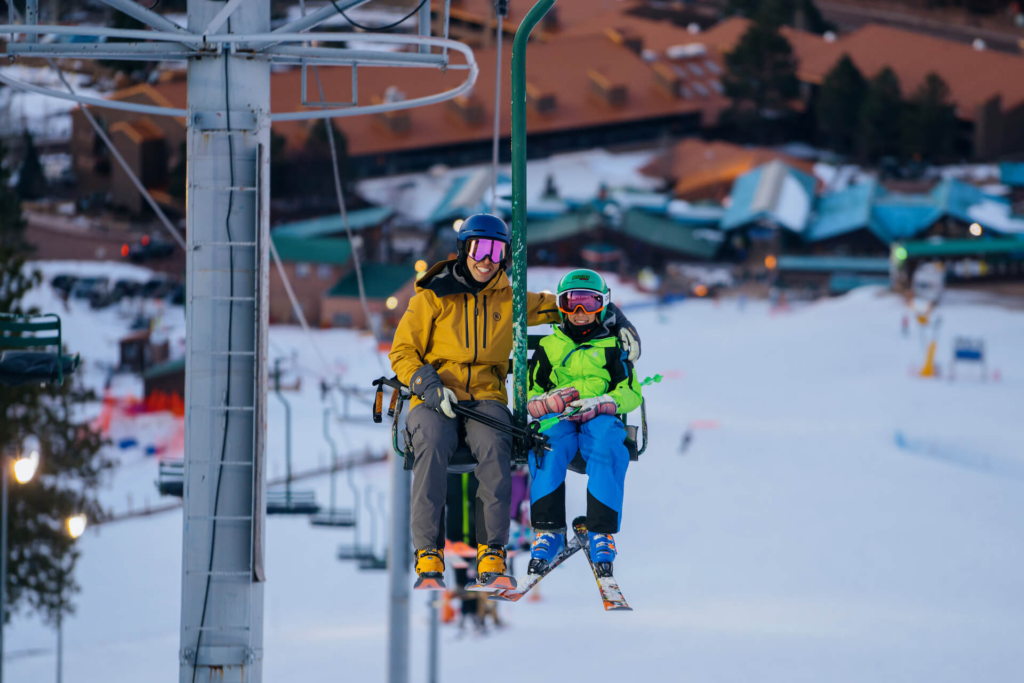
Lift 2 wasn’t just a way up the mountain. It was where friendships formed, where kids grew up, where stories began, and where so many runs started with a quiet ride and a wide-open view.
As Angel Fire Resort continues to evolve, we carry those memories with us.
And we tip our hat to Lift 2. You’ll be missed.